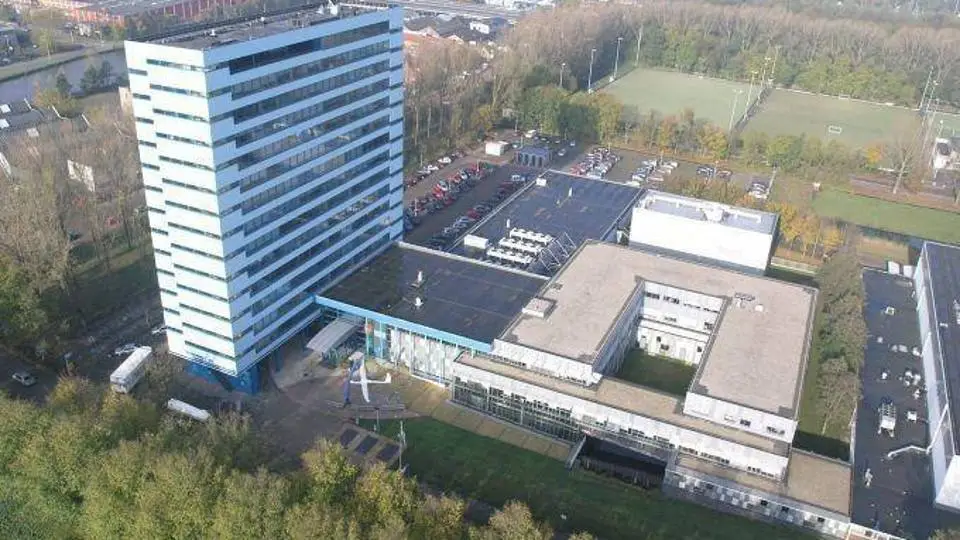
Biomechanical Engineering is a research department at Delft University of Technology, located in the Faculty of Mechanical, Maritime and Materials Engineering (3ME). The Department of Biomechanical Engineering coordinates education and research activities in the field of Mechanical Engineering techniques such as modelling and design, to analyse the interaction between biological and technical systems.
In the Delft Biorobotics Lab, we develop biologically inspired robots, with a focus on humanoid robots. We believe that the future challenge for robotics lies in safe human-robot interaction. This implies a totally different set of design requirements compared to robots that work in structured environments such as factories: rather than high speeds and positioning accuracy, sensitivity ("tenderness") and compliance are required. These challenges motivate us to study biology, not only as the environment that the robot must interact with, but also as a source of design inspiration.
Job description
It is expected that humanoid robots will soon play a major role in the domain of service robots. They may become social companions that help in the household, take care of elderly people or entertain children, fly to space, or clean up disaster sites that are unsafe for humans to enter. All these tasks require advanced walking capabilities. Despite much research in this area, however, there is no humanoid robot yet that walks in such a stable, efficient, and versatile manner as humans. The claim of the KoroiBot project is that this problem does not only pertain to the current hardware. We argue that powerful self-learning software is needed to get the best possible walking capabilities out of the existing hardware.
One goal of the project is to enable humanoid robots to generate efficient and robust walking motions in a variety of situations based on model-predictive control algorithms. However, as the models represent an idealisation, walking will not be optimal on the actual hardware due to model differences. The applicant will work towards closing this reality gap through on-line reinforcement learning. By adapting both the model and the policy, and by starting with the model-based controller, we aim to quickly and continuously adapt to the actual hardware. In order to meet real-time constraints during the adaptation, we will use parallel reinforcement learning algorithms developed in our group.