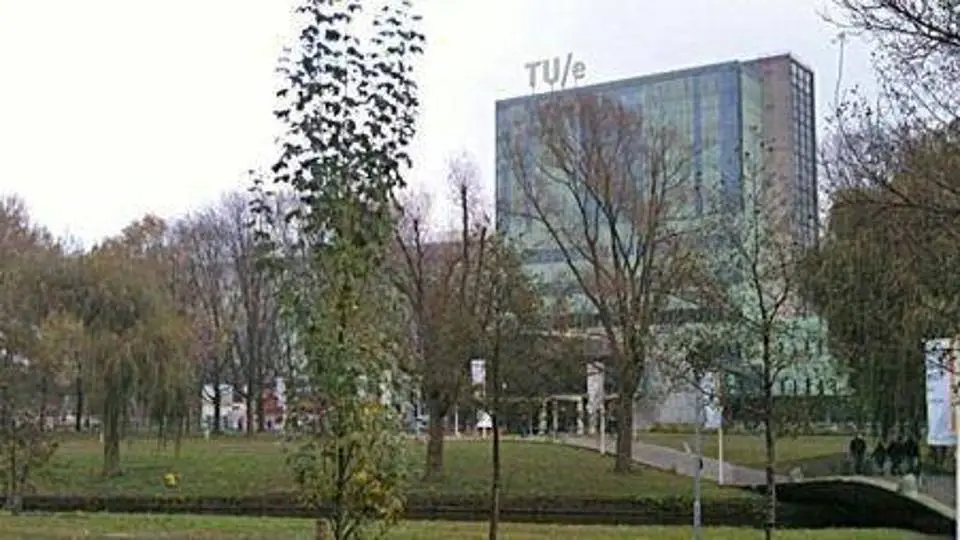
The graduate programs (M.Sc. and Ph.D.) in Innovation Management attract top-level students from all over the world. Researchers are member of the KNAW accredited Beta research school.
Group
The ITEM group is part of the School of Industrial Engineering at Eindhoven University of Technology. The group consists of about 15 fte faculty and 10 fte PhD’s who participate in and contribute to the research, educational and service program of the ITEM group. The program on New Product and Business Development Processes is one of the leading programs in the world in its field. The program emphasizes means for measuring and improving the process of conceiving, developing, and launching new products and businesses. As such, it encompasses both strategic and operational activities of new product and business development. While the program covers the full range of establishing new products and its underlying design, and the development and commercialization processes in (new) businesses, its primary focus is on high-tech products.
Job description
As a PhD candidate, you are invited to contribute to the Innovation, Technology Entrepreneurship & Marketing (ITEM) group’s research program focusing on new product and business development processes. The PhD position is linked to the chair of prof.dr. F. Langerak in the School of Industrial Engineering at Eindhoven University of Technology. The PhD project focuses on digital business model innovation and is part of the Data Science proposal submitted to the TU/e Impulse program.
Since the late 90-ties Internet has been the playing ground to test business model innovations. Two types of modern business models are of particular interest and importance: the so-called freemium and the digital community-based business models. Both are located on the interplay between free and paid information and services, and use the data delivered by their users to generate and eventually appropriate the added value. The question of value appropriation, although essential for any viable business, can be quite sensitive due to privacy of the users.
The recent technological developments related to, among others the establishment of the HTML5 standard and stricter governmental regulations regarding user data collection and storage, make users increasingly conscious and protective of their privacy. A vivid example of the latter regulations is the Cookie Law in the Netherlands that entered into force on June 5, 2012. More governmental initiatives, both in the Netherlands and Europe-wide are expected. Because of that some existing revenue-generating models become problematic or even impossible. Therefore the Internet world in the near future will be increasingly experimenting and searching for novel, viable and privacy-friendly business models. This project therefore aims to understand how technological trends and governmental regulations influence the possible Internet-based business models and establish their financial and societal consequences.
The research should lead to at least three academic papers that can be published in top scholarly journals and, of course, a successful PhD defense after four years. The candidate also participates in the PhD education program and is moderately involved in teaching entrepreneurship courses at the bachelor and master level. A stay abroad is potentially part of the PhD project.