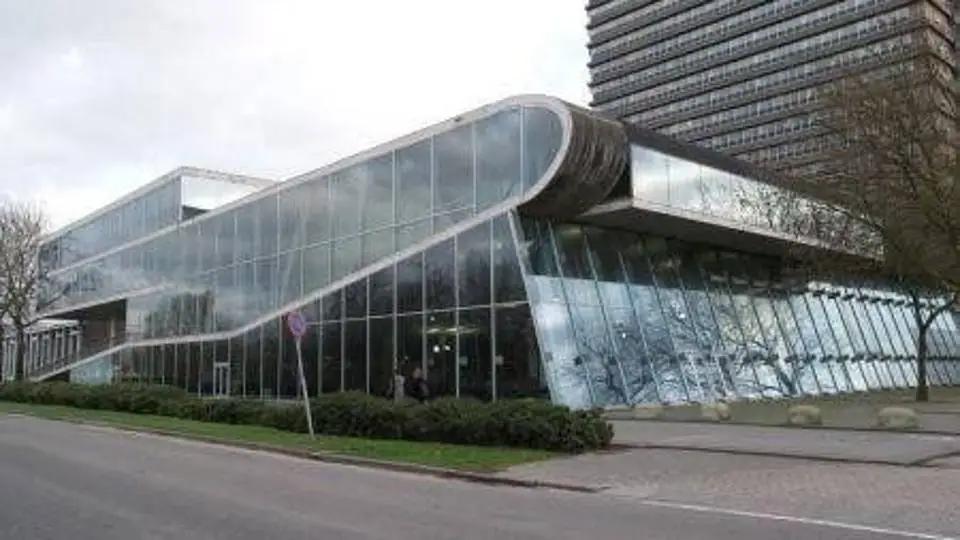
About the organisation
The Science Faculty of Utrecht University consists of six departments: Biology, Pharmaceutical Sciences, Information and Computing Sciences, Physics and Astronomy, Chemistry and Mathematics. The Faculty is home to 3500 students and nearly 2000 staff and is internationally renowned for the quality of its research. The Faculty's academic programmes reflect developments in today's society.
The Molecular Biophysics group has a strong multi-disciplinary character that is based on the group’s long-standing background in fluorescence spectroscopy. The current programme of the group focuses on the application and development of novel fluorescence spectroscopy-based imaging methods. The mission of the group is to develop and exploit fluorescence spectroscopy-based techniques in microscopy. In our vision the future of fluorescence microscopy lies in the combination of fluorescence imaging and spectroscopic techniques. The novel imaging methodologies under development in the group utilize advanced light sources, non-linear excitation methods and contrast based on fluorescence spectroscopy.
Examples include fluorescence lifetime imaging, spectral imaging, fluorescence anisotropy imaging, single molecule imaging, multi photon microscopy, second harmonic microscopy and super-resolution microscopy. Applications that we are working on include the imaging of molecular interactions, characterization of nano-particles and (in-vivo) tissue imaging.
The technical developments by the group are to a great extent driven by biological and biophysical problems which cannot be imaged with conventional techniques. Fluorescence spectroscopy relies on the ability to incorporate luminescent molecules in a chemically specific way into the sample. Moreover, the application of spectroscopic contrast techniques requires knowledge of their photophysical characteristics. For these reasons the group also works on the characterization and development of luminescent labels.