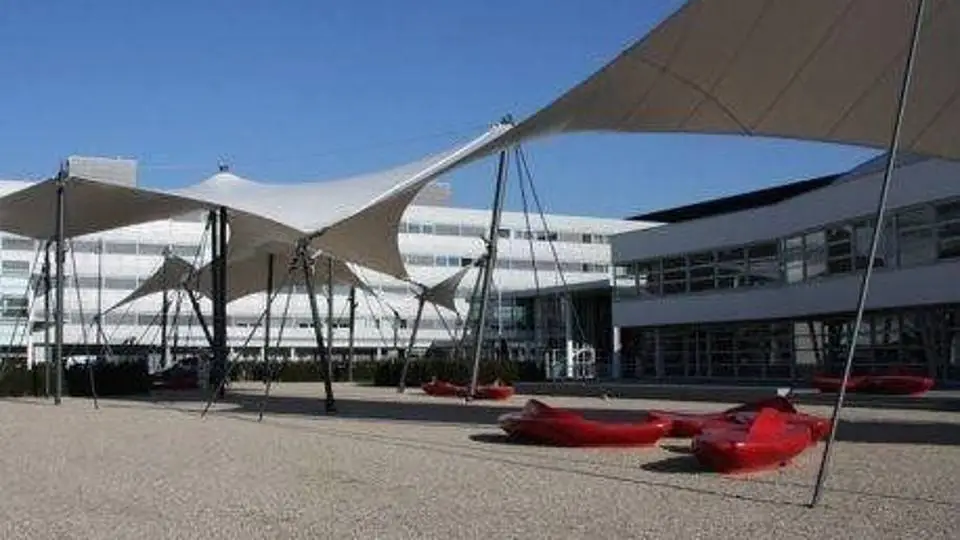
The faculty offers an interdisciplinary setting for its 500 employees, 350 PhD students and 1700 undergraduates. Together they work on a broad range of technical innovations in the fields of sustainable energy, telecommunications, microelectronics, embedded systems, computer and software engineering, interactive multimedia and applied mathematics. EEMCS: Your Connection to the Future.
Microelectronics is one of six departments that make up the EEMCS faculty. Hot topics within the research field of ME&CE are covered by five research groups. All groups work closely together on numerous research projects within the field of microelectronics while pursuing their individual scientific goals. Research in the Circuits and Systems group covers the theory and applications of circuits and systems, signal processing, and VLSI circuit and system design methodology.
Job description
Over the last decade, satellite navigation using GPS has become ubiquitous. Professional users of GPS services and mass market consumers expect that GPS will be available anywhere, anytime. However, where it is needed most – typically in built-up areas and indoors – satellite navigation performs worst. These environments call for the use of a wideband signal, instead of a narrowband satellite navigation signal, to resolve multipath and for local transmissions, to provide sufficient signal power. These required fundamental properties suggest Ultra-Wideband (UWB) radio as a promising technique for localisation.
The research project's goal is to design and develop an effective, scalable and low-cost indoor positioning system for practical applications, using UWB radio signals. Channel, multiple access and radio signal processing aspects are part of the research, as well as scalability, infrastructure and positioning aspects. The candidates together will also develop, build and test a working prototype UWB positioning system, targeting low-complexity end-user devices and sub-decimeter level positioning accuracy.
Two PhD students will work in close collaboration. The project is being carried out jointly by the Circuits and Systems group of the Electrical Engineering Mathematics and Computer Science Faculty, and the Mathematical Geodesy and Positioning group of the Civil Engineering and Geosciences Faculty.