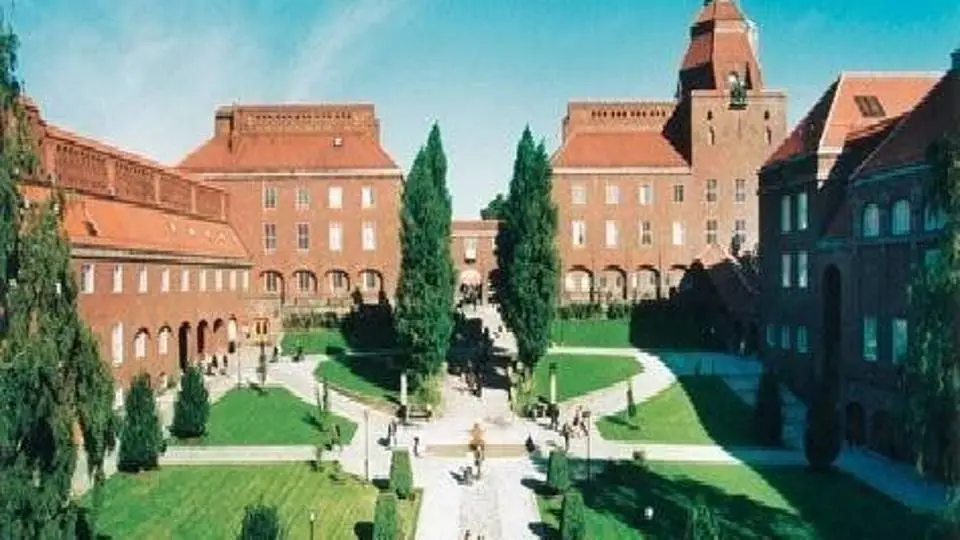
The School of Electrical Engineering conducts research and education in the fields of electrical engineering, systems engineering, information and communications theory, space and fusion plasma physics, and electrical power engineering. 380 people work in this creative and dynamic environment, out of which half are Ph.D. students, many from other countries. Our research projects are carried out in close collaboration with industry partners as well as with research colleagues from Sweden and other countries. The school is responsible for educating engineers in electrical engineering and offers six masters programs, which are in great demand and have a close connection to our main field.
The Automatic Control Lab at the School of Electrical Engineering of KTH conducts research in networked control systems, robotics, control of communication systems, systems biology and system identification. Much of the research is conducted within EU projects, as well as within the inter-departmental centers CAS and ACCESS Linnaeus Centre. The group has also strong financial support from the Swedish Foundation for Strategic Research and the Swedish Research Council.
Work description
We invite applications for one research associate (postdoc) position in multi-robot task planning and hybrid control using formal methods. The successful candidate will join a research group that is focusing on new design methodologies for distributed planning and control of multi-agent systems using formal verification methodologies from computer science.