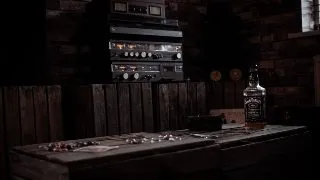
Victorian detectives in their consulting rooms; cut-purses lurking in the shadows of Westminster; cynical coppers; idealistic barristers; charming fraudsters; mob bosses in east-end watering holes - for centuries the popular imagination has peopled London with characters defined by crime.
But whose stories do we choose to tell? What are the moral implications of crime fiction? Why are puzzle-style detective stories so enduring?On this course, you will delve into a range of crime-writing genres including detective fiction, caper tales, police procedurals, courtroom dramas and true crime. You'll gain a solid overview of a wide variety of texts and explore key questions posed by critics of crime fiction.We will investigate the many generic conventions of crime writing and interrogate the pleasures and pitfalls of reading it.
You'll also have the chance to take advantage of the ideal London location to explore sites made famous by celebrities of crime, from Sherlock Holmes to Jack the Ripper. Classic texts will be mixed with screenings of modern crime dramas and a theatre trip as we consider the implications of constructing crime as narrative.Over three weeks, this course will offer a genre-based approach to studying crime fiction. Week one will begin with detective fiction and some of its sub-genres, such as the 'whodunnit' the 'howcatchem' and the 'cosy'. Week two will broaden the scope to other ways of writing crime including police procedural, the picaresque, and crime drama in visual media. The final week will focus on the ambiguities of the 'true crime' genre.
You will:
- Read and analyse a broad variety of crime fiction
.- Become familiar with literary and cultural theories of crime fiction through lectures, reading and seminar discussions.
- Consider the practical factors affecting classifications of crime writing.
- Explore the relationship between crime fiction as the 'modern epic of the city' on site at mythologised London locations.
- Construct your own theories for interrogating the ubiquity of crime fiction genres, through discussion and written assessment. British Crime Writing will focus on interrogating some of the most popular and enduring shared literary forms of the last three centuries.
The course shall take a generic rather than chronological approach to the crime fiction canon, exploring recurring patterns and motifs as well as seminal texts.You will explore fundamental questions about how and why we tell stories about crime. While covering a broad range of texts in different generic traditions of crime writing, we shall emphasise throughout the general worth and importance of popular fiction.
Period
01-07-2013 - 19-07-2013 (3 weeks)
Target group
This course is suited to students with a keen interest in thinking critically about genre and popular fiction. Those who begin with a desire to learn about and discuss crime fiction from a variety of viewpoints will gain the most from the subject matter and methodology. Students from any background are welcome, but please note that there will be considerable emphasis on critical reading and literary analysis.
Course aim
The aim of this course is to give you a solid overview of a wide variety of texts in the genre and a general understanding of key questions asked by critics of crime writing. It will also give you tools for thinking about how the canon(s) of crime fiction have been formed. You will be encouraged to consider the social, historical and formal factors which influence generic definitions. The course also aims to marry the reading of British crime fiction to King's London location. You will gain an appreciation of the role London's geography and institutions have played in the construction of crime narratives, and of how crime writing in turn has influenced the mythologisation of the criminal city.
Credits
7.5 ECTS credits
Many of our students get credit for the summer courses taken at Kings. You should approach your home university before applying to find out whether they accept our courses for credit. We would recommend a three-week course to be equivalent 4 US credits or 7.5 ECTS, for instance.
Course fee
GBP 1350: tuition fee only
Course leader
Sarah Crofton is a postgraduate researcher at King's College London. She holds an MPhil in Popular Fiction from Trinity College Dublin, where she also received her BA in English and Philosophy. Sarah's current principal area of research is in oc
King's College London
Address: Strand, London
Postal code: WC2R 2LS
City: London
Country: United Kingdom
Website: http://www.kcl.ac.uk/summerschool
E-mail: summerschool@kcl.ac.uk
Phone: +44 20 7848 1533
British Crime Writing

label
Diverse
calendar_month
2013-02-11, 00:00
autorenew
2025-09-29, 17:01
history_edu
Ioana Dinescu