The course provides instruction in election forecasting. The word, "forecasting," is sometimes used loosely. Here it will have a very specific meaning: the prediction of an event before it happens. Most social science, political science included, does not do forecasting. Instead, they engage in description, e.g., what is happening or what has happened, or explanation, e.g., what are the theoretical reasons something has occurred.
Explanation, in particular, wears the scientific mantle, and the tools for its investigation can be sophisticated, i.e., theories, hypotheses, concepts, measures, presented systematically in an equation with a dependent variable as a function of independent variables. That model, as it is called, may then be estimated by a statistical technique, most probably some form of regression analysis.Election forecasting has taken place at all system-levels of the polity, from the local to the constituency to the region to the nation. Most of it, however, has focused on national elections, mainly presidential or parliamentary.
That will be the emphasis here. Although electionforecasting is a relatively new field, by now a number of studies have cumulated, at least forcertain countries. France, The United States and the United Kingdom are often the subject ofsuch investigation. Note that these political systems have important differences, such as theexecutive arrangements or the number of parties. Thus, we observe that forecasting of electionsneed not confine itself to "simpler" systems, say with two-parties and a single executive.
Aswell, Canada, Germany, Hungary, Italy, Portugal, and Spain have to their names reputable election forecasting investigations. And, the list of nations so studied is growing. (For example,as a result of efforts by my students from earlier classes, we have now added to the world fore casting models from Belgium, Brazil, Turkey, Lithuania, and Norway, to mention some).Undoubtedly, during this class, other election forecasting models will be identified for othernations represented by students in the course.
Period
17-02-2013 - 22-02-2013 (1 weeks)
Target group
advanced students and junior researchers in political science and adjacent disciplines
Course aim
as above
Credits
2.0 ECTS credits
Participants have the opportunity to gain 2 ECTS credits from the University of Vienna for attending an Introductory or Advanced Courses (15 hours). Participants must successfully complete their course, and successfully complete their project assignment in order to obtain 2 ECTS credits Transcripts will be sent to the participants by The University of Vienna. For all courses being attended (Introductory, Advanced and/or Software Training Courses), participants also receive a certificate of attendance.Certificates of accreditation (if applicable) as well as certificates of attendance are sent to the participants after the Winter School has ended, by the University of Vienna
Course fee
EUR 0: ECPR Member 495
Non-ECPR Member 690
ECPR Member who has attended the ECPR SSMT 2012* 445
Non-ECPR Member who has attended the ECPR SSMT 2012* 640*There is a 50 loyalty discount deducted from all Introductory and Advanced Courses to participants who attended the 2012Summer School in Methods and Techniques (SSMT) in Ljubljana (this discount does not apply to Software Training Courses).
Course leader
Michael Lewis-BeckUniversity of Iowa
Scholarships
Self funded students from ECPR member institutions will be able to apply for funding in the form of scholarship funds and travel and accommodation grants. Please use the following link for further information: http://new.ecprnet.eu/Funding/WinterSchool.as
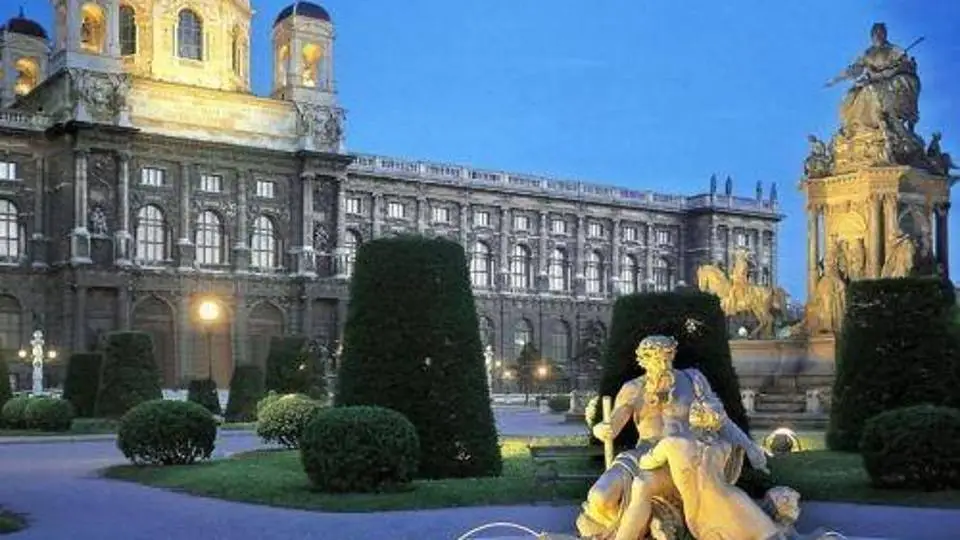
University of Vienna
Address: ECPR Central Services University of Essex, Wivenhoe Park, Colchester, Essex
Postal code: CO4 3SQ
City: Vienna
Country: Austria
Website: http://new.ecprnet.eu/Events/EventDetails.aspx?EventID=11
E-mail: dchap@essex.ac.uk
Phone: 00441206874115
Election Forecasting
label
Diverse
calendar_month
2013-01-07, 00:00
autorenew
2025-09-29, 17:00
history_edu
Silviu Marinescu