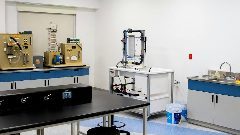
How does Earth work? Our modern understanding of processes in the Earth's mantle and the crust results a great deal from the application of thermodynamics. Rocks are equilibrium systems and are filled with information. This is coded information. Chemical equilibrium thermodynamics enables us to unravel it and to translate it into quantitative data on pressures and temperatures of rock formation and on its chemical conditions. Thermodynamics is, thus, a most important tool for geologists, especially for mineralogists, geochemists and petrologists. Course offered by Department of Geoscience
Period
17-07-2013 - 14-08-2013 (4 weeks)
Target group
Masters's and PhD students
Course aim
After completion of the course the student is expected to be able to
- explain fundamental termodynamic notions and to define them mathematically
- use databases of thermochemical data
- formulate equilibria in metamorphic, magmatic and sedimentary systems
- apply thermodynamic calculations (e.g for the determination of melt-mineral equilibrium conditions, for geobaro-/geotermometric reconstructions of P-T conditions)
- compute simple binary phase diagrams
- apply Schreinemakers phase theory- apply geothermo-/ geobarometry programmes (f.eks.DOMINO-THERIAK by C. de Capitani)
Credits
5.0 ECTS credits
Course fee
EUR 0: Students on a bilateral exchange programme do not have to pay. Freemovers are obliged to pay participation fees while tuition fees only apply to freemovers from countries outside the EU/EEA/Switzerland.
Course leader
Hans Dieter Zimmermann, Aarhus University
Aarhus University International Centre
Address: Hoeg Guldbergs Gade 4, building 1650 Aarhus C
Postal code: 8000
City: Aarhus
Country: Denmark
Website: http://www.au.dk/summeruniversity
E-mail: SummerUniversity@adm.au.dk
Phone: +45 8942 2320
Geothermodynamics
label
Diverse
calendar_month
2013-01-28, 00:00
autorenew
2025-09-29, 17:00
history_edu
Cristian Ion