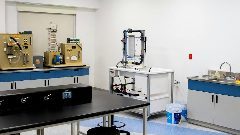
Research on biosciences and biotechnologies has evolved vastly during the past few decades. Today, biosciences and their novel applications have an enormous impact on society as they shape our understanding of life, death, sickness, health, and environmental sustainability. The rise of new medical technologies, such as stem cell therapies and nanotechnology, forces us to study their influence on our world-view and concepts of life. Likewise, the environmental crisis compels us to reconsider our relationship to nature.
Bioethics is a philosophical study of the ethical controversies brought about by the above-mentioned advances in biology and medicine. Bioethicists attempt to answer the ethical questions that arise in the relationships between life sciences, biotechnology, medicine, politics, law, philosophy, and theology. As a movement, bioethics began in the late 1960s - during an era of intense social upheaval in North America. Since that period, the bioethics movement has taken the form of an academic discipline.The course consists of lectures, case-based workshops, reading, and a study journal that will be completed during the course. Prior to the course, all students are asked to write an orientation paper (two to three pages) based on assigned texts.
Period
07-08-2012 - 23-08-2012 (3 weeks)
Target group
This course is designed for BA, MA and doctoral students. It is intended for students who can tie in bioethics with their primary field of study such as philosophy, theology, ethics, medicine, biosciences, law or adjacent fields.
Course aim
The course introduces students to the history of bioethics, to the role of various theories and approaches in bioethics, to medical, environmental and technological ethics as well as to ethical questions related to novel biotechnologies. The students will also be introduced to biolaw and its developments.
Credits
6.0 ECTS credits
Course fee
EUR 470: Course fee
The course fee can be paid with a credit card or with a bank transfer before the start of the Helsinki Summer School. It can also be paid upon your arrival in Helsinki. Degree and exchange students attending universities in the Helsinki area are exempted from the course fee. Degree and exchange students attending other Finnish universities are required to pay a half of the course fee (235 EUR).
EUR 150: Registration fee
The registration fee is 150 EUR additional fees for international students. Payment is due within seven days of receipt of written notification of your acceptance to Helsinki Summer School. If you register before 31 May 2012, you will receive a 50 EUR discount on the registration fee. The registration fee for degree or exchange students attending Finnish universities is 50 EUR.
The registration fee is non-refundable. Payment may be made either by bank transfer or credit card (Visa and Eurocard/Mastercard only). If we do not receive a credit card payment or copy of the bank transfer within one week of notification of your acceptance, we will have no choice but to cancel your course reservation. Your application will, however, remain in our database and, if there are still places available, you may renew your registration simply by contacting us.
Course leader
Professor Jaana Hallamaa
Helsinki Summer School is supported by a consortium of nine universities in the Helsinki region.
Address: P.O. Box 3 University of Helsinki
Postal code: FI-00014
City: Helsinki
Country: Finland
Website: http://www.helsinkisummerschool.fi/home/index
E-mail: summer-school@helsinki.fi
Phone: +358 (0)9 191 24766
Introduction to Bioethics

label
Diverse
calendar_month
2012-06-18, 00:00
autorenew
2025-09-29, 17:00
history_edu
Silviu Marinescu