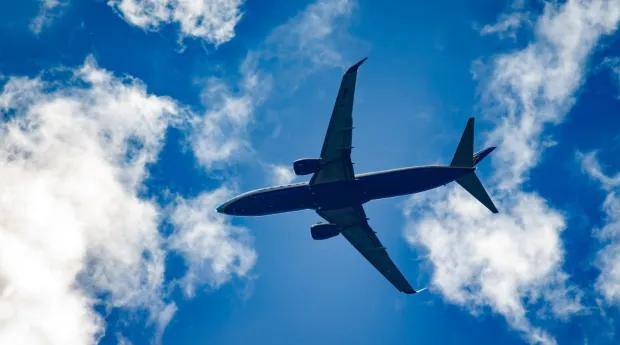
Radiation-induced failures in microelectronics pose a growing concern in the aerospace and avionic communities. Incident radiation acting on these devices is mainly due to cosmic rays and their secondary particles produced in the Earth atmosphere. Energetic particles induce various device malfunctions via their interaction with materials in electronic devices. Due to the high integration level in modern devices this has become now an issue for all commercial applications, also at ground level. The aim of this course is to introduce the natural radiation environments and their impact on electronic devices. After a brief introduction, the radiation environments will be presented for space and atmospheric applications (avionic and ground level). Then, the effects of radiation on matter will be discussed in detail, which will reveal the fact that the generation of electron-hole pairs is the predominant phenomenon in radiation-induced device malfunctions. Different radiation-induced effects in microelectronics will be discussed. As an example, we will focus on soft errors induced in atmospheric environment. We will present the principles of Monte Carlo simulation tools, which are very useful to establish the transient current shapes and to evaluate the soft error rates. These kinds of estimation tools can be validated experimentally thanks to accelerated tests under beam and/or accelerated test in natural environment (i.e. in high altitude). Finally, we will demonstrate a memory test bench that will be irradiated, and we'll see how much errors occur under radiation stress.
Period06-08-2014 - 08-08-2014 (1 weeks)
Target groupPrerequisites: Basic knowledge of university electronics and radiation interactions.
Course aimThe most important aims of the Summer School are to develop post-graduates scientific readiness and to offer students the possibility to study in a modern, scientific environment and to create connections to the international science community.
Credits2.0 ECTS credits
Course feeEUR 0[Convert to USD]Participating the Summer School is free of charge, but student have to cover the costs of own travel, accommodation and meals at Jyvskyl.
Course leaderCoordinator: Dr. Arto Javanainen (University of Jyvskyl, Finland)Lecturer: Dr. Frederic Wrobel (University of Montpellier2, France)
ScholarshipsThe 24th Jyvskyl Summer School is not able to grant any Summer School students financial support. In order to ensure your participation, we recommend that you take steps to secure your own funding, for example, by turning first to your home institution
University of Jyvaskyla Faculty of Mathematics and Science and Faculty of Information TechnologyAddress: Jyvaskyla Summer School, Faculty of Mathematics and Science P.O.Box 35 (YK312), FIN-40014 University of Jyvaskyla, Finland
Postal code: FIN-40014
City: Jyvaskyla
Country: Finland
Website: http://www.jyu.fi/summerschool
E-mail: jss@jyu.fi
Phone: +358505818351