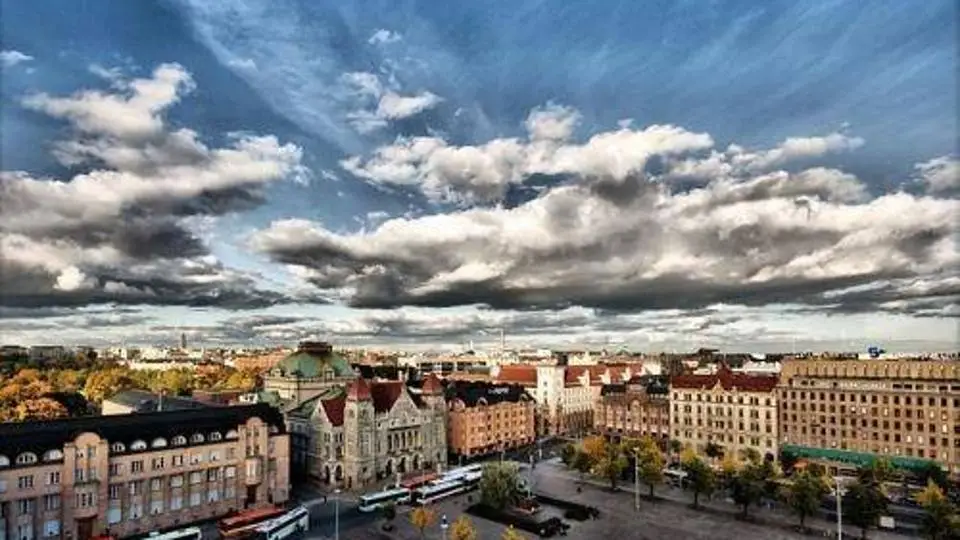
This Helsinki Summer School course takes a look at the welfare city as a sustainable model of urban development. A welfare city, such as Helsinki, promotes the wellbeing of its citizens, sustains a balance between the needs of both nature and the people, and responds to social and ecological awareness alike. Or does it?This course offers lectures, workshops and excursions in Helsinki to examine what makes the Finnish capital a welfare city.
The course is designed for Master's degree students of social sciences, sociology, geography, cultural studies, architecture, urban planning, environmental studies, politics, or economics.Cities also change. There is now increased segregation again, public spaces have eroded, and gentrification has widened social gaps. These are often interpreted as consequences of 'the crisis of the welfare state', at least in Finland and in the other Nordic countries. At the same time, the city has proved to be increasingly central in the provision of services and infrastructure, often taking over from what used to be the domain of the state.
Period
06-08-2013 - 22-08-2013 (3 weeks)
Target group
This course is designed for Master's degree students of social sciences, sociology, geography, cultural studies, architecture, urban planning, environmental studies, politics, or economics.
Course aim
In the Finnish and the Nordic context, the welfare city offers services and the infrastructure, which enable the pursuit of happiness and wellbeing. This course is inspired by the history of European urban planning and will explore liveable cities through current case studies, especially in the Nordic region. Similarities and differences with other cities in and outside Europe will also be tackled.During the three weeks of the course, the students and teachers will analyse how a welfare city works.
For example, how should we organise housing, social services and urban planning in a liveable welfare city? What has design to do with it? And what helps to make this welfare city sustainable?Issues such as these will be discussed by teachers from the interdisciplinary Network of Urban Studies. Other lecturers include urban experts from Finnish and international universities as well as from other institutions.
Credits
6.0 ECTS credits
Course fee
EUR 490: The course
The course fee can be paid with a credit card or with a bank transfer before the start of the Helsinki Summer School. It can also be paid upon your arrival in Helsinki. Degree and exchange students attending the universities organising the Helsinki Summer School are exempted from the course fee. The course fee for professionals is 790 EUR.
EUR 150: Registration fee
The registration fee is 150 EUR additional fees for international students. Payment is due within seven days of receipt of written notification of your acceptance to Helsinki Summer School. If you register before 31 May 2012, you will receive a 50 EUR discount on the registration fee. The registration fee for degree or exchange students attending the universities organising the Helsinki Summer School is 50 EUR.
The registration fee is non-refundable. Payment may be made either by bank transfer or credit card (Visa and Eurocard/Mastercard only). If we do not receive a credit card payment or copy of the bank transfer within one week of notification of your acceptance, we will have no choice but to cancel your course reservation. Your application will, however, remain in our database and, if there are still places available, you may renew your registration simply by contacting us.
Course leader
Mr. Giacomo Botta
Helsinki Summer School is supported by a consortium of three universities in the Helsinki capital region: the University of Helsinki, Aalto University and Hanken School of Economics.
Address: P.O. Box 3 University of Helsinki
Postal code: FI-00014
City: Helsinki
Country: Finland
Website: http://www.helsinkisummerschool.fi/home/index
E-mail: summer-school@helsinki.fi
Phone: +358 (0)9 191 24766
The Welfare City
label
Diverse
calendar_month
2013-04-08, 00:00
autorenew
2025-09-29, 17:01
history_edu
Cristian Ion